People keep landing on this site looking for the map and the tools, so I thought it was about time somebody who actually plays the thing wrote down what EVE Frontier is. I've played it since February 2025, I run the EF-Map tool suite for it, and before that I played EVE Online on and off from its launch in 2003. So this is a player's answer, not a press release, and I'll be honest about the rough edges as well as the good bits.
The short version. EVE Frontier is a space survival MMO from CCP, the EVE Online studio, who now go by Fenris Creations. It runs on one persistent single-shard server, it is currently in open alpha with unrestricted access through paid founder access, and it wipes and restarts in periods called cycles while the developers build it out in public. You fly one ship, you scavenge and build everything yourself, other players can kill you anywhere, and a blockchain quietly acts as the game's public database underneath it all. If that last part makes you wince, I've written separately about why it's not the thing you're dreading.
Quick facts
| Question | Answer |
|---|---|
| Genre | Space survival MMO, single-shard persistent world |
| Developer | CCP (EVE Online), now operating as Fenris Creations |
| Status | Open alpha, world resets in cycles as development continues |
| Universe size | 24,000+ star systems |
| Price | Founder access, about $40 one-off at the time of writing |
| Free trial | 5 days at the time of writing |
| Platform | PC and Mac |
The one-server thing
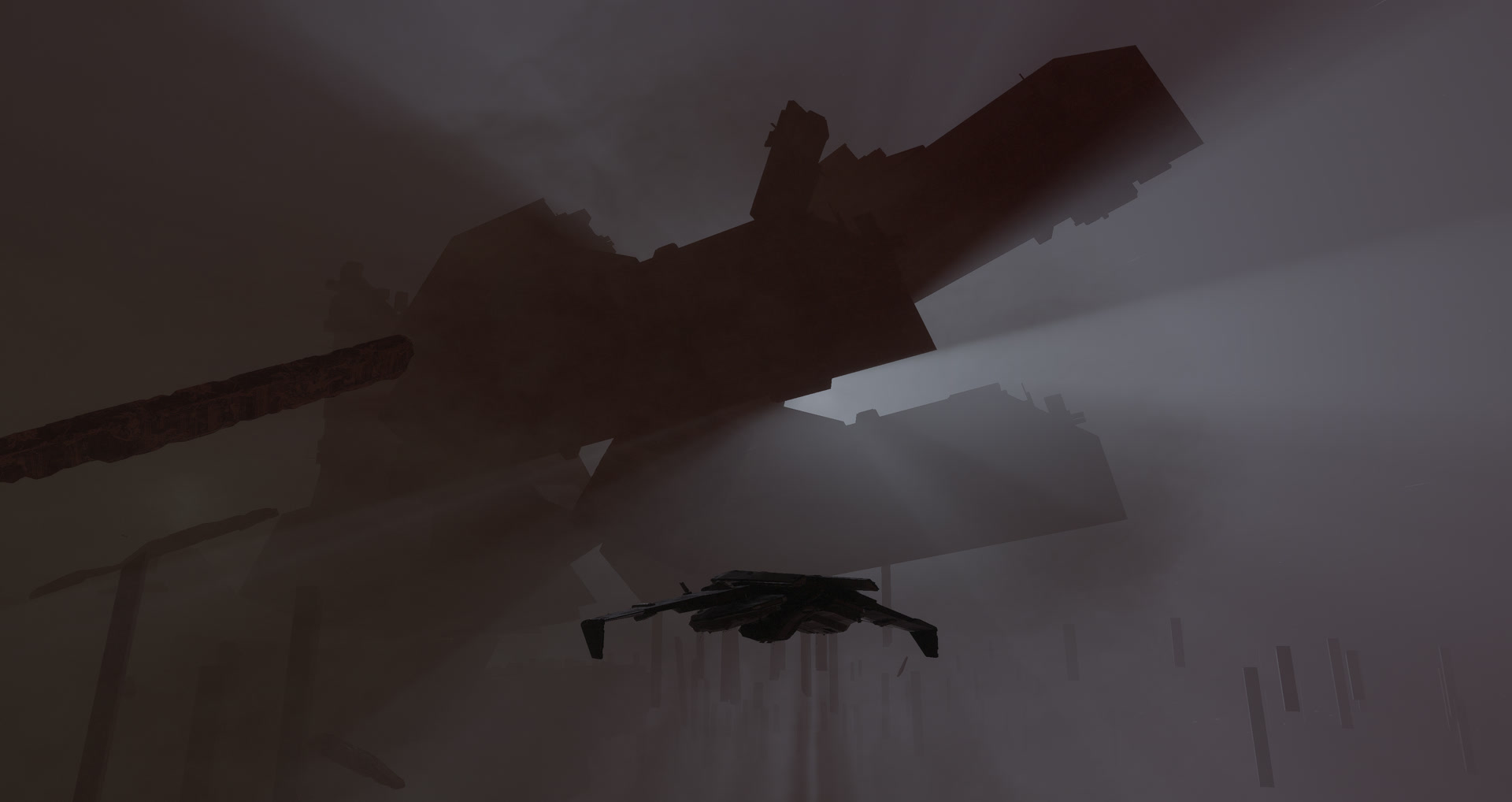
For me this is the whole pitch, and it's the thing most space games don't have. There is one universe and everybody is in it. Your friend joins and you never have the which-server conversation, because there's only the one. The most notorious player in the game can cross your path, personally, because there is nowhere else for them to be. I recently put about 300 hours into Spacecraft, an early access game on Steam that promised modular shipbuilding and industry automation, and it's fun, but every session is a private little bubble with a handful of people in it. EVE Frontier is the opposite of that. From launch the world is meant to be properly persistent too, so you could step away for two years and come back to find your stuff still where you left it, assuming you hid it well.
What you actually do
You start in the most basic ship there is and the game is immediately trying to kill you. Your first hour is mostly about not dying, to NPCs and to heat, while you figure out the mechanics, scrape together materials and get some modules built for your ship. Then you get a base down. Then you start making longer trips, because everything worth having is somewhere else, and travel has a real cost in fuel, which is why the game needs a proper 3D map rather than the flat one EVE Online gets away with. Distance matters here.
Other players are the weather. You don't know if the ship on your scanner is friendly and they don't know that about you either. There's no police, no safe zone, no NPC cavalry. You can join a tribe, which is Frontier's version of a guild, and honestly I'd say you should, because the game played entirely solo would be a lonely old time. Playing it in voice chat with tribemates is where it comes alive.
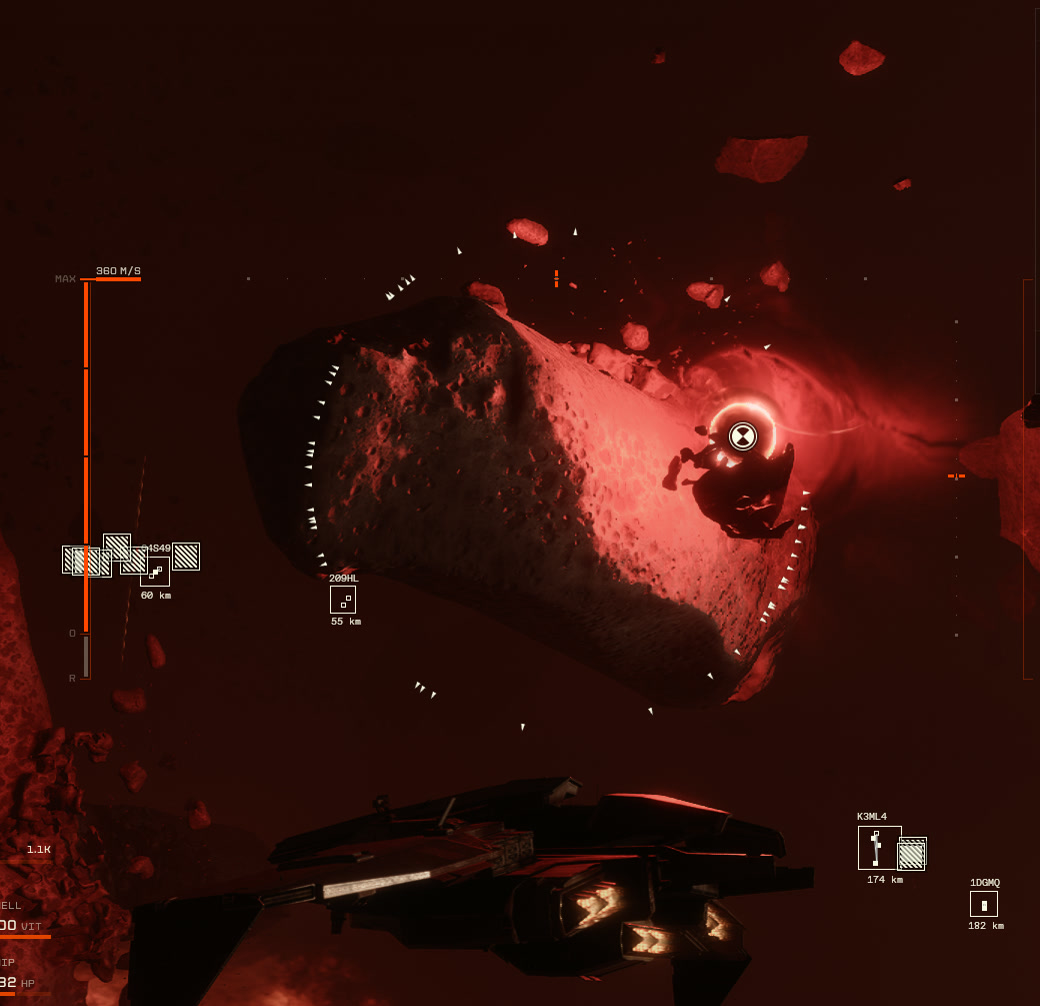
What surprised me most coming from EVE Online is how personal it feels. There's no overview window listing everything in space around you in tidy rows. You look out of the window. You ping your sensors and get unresolved signatures, and you genuinely don't know if that contact is an asteroid, an NPC or a person until you commit to finding out. There are two sensor types at the moment, gravity for mass and electromagnetic for emissions, with more announced, and this cycle they added modules that suppress your own EM signature, so the sneaky cat-and-mouse game I used to love in EVE Online is starting to exist here in a much more physical form. The developers have said thermal emissions are coming, so a base running heavy industry might one day glow on everybody's map. That kind of system-on-system consequence is the direction the whole game is heading, and it's the thing I find most promising about it.
Cycles, wipes and the Keeper
The game world resets between cycles, and the fiction covers this. An entity called the Keeper resurrects you and lets civilisation have another go, and when it collapses, round again. I'm not really a lore person so I'll leave the deep reading to others, but the setting was modelled on three merging galaxies, with three supermassive black holes at the heart of it, and the developers say that gravity will eventually matter mechanically as you travel closer to the centre. And the wipes are already going a bit porous. At the end of the last cycle a chain of cryptic lore breadcrumbs let players carry a single structure across into this cycle, the first time anything has survived a reset. I'd expect more of that.
Do wipes ruin it? I think they're necessary right now, because the game is testing a real economy and you can't balance one while old fortunes persist. Most material progress resets and everybody broadly starts again, the early game gets re-tested, and the hardcore burn through the new content in a couple of weeks and go back to waiting. That is a fair description of the current rhythm and you should know it going in.
What state is it actually in?
This cycle, Cycle 6, is deliberately thin. The developers stripped out a lot of inherited EVE Online systems and replaced the fitting screen with their own modular one, and in the process the game went from a range of ships to a single hull whose capabilities come entirely from what modules you squeeze into it. New modules have been arriving steadily, roughly two or three a week since the cycle started, and each one visibly changes what people fly. But if you download it expecting a finished game with a progression ladder, you will exhaust the current content quickly. I'd honestly call that fair warning rather than criticism. It's an alpha that behaves like an alpha, and the five-day trial exists precisely so you can find out what you think it is before paying.
The part that keeps me here between cycles is the building side. The game's state lives on a public blockchain, which in practice means the database is just there, publicly readable and open to build against, no API keys, no permission slips. That's how EF-Map exists, along with a growing pile of community tools, and you don't need to be a programmer to join in. I wasn't one when I started. If that side interests you at all, the game is currently the most open sandbox I know of for it.
Should you try it?
If the words single shard mean anything to you, yes, and the trial makes it free to find out. Go in expecting an alpha, join the official Discord because it's genuinely friendly and the developers actually read it, and get into a tribe early. If you want the comparison with its famous parent, I've written that up separately, because it deserved its own article.
Related Posts
- EVE Online vs EVE Frontier: what's actually different - the head-to-head from someone who played both, twenty years apart
- My EVE Frontier review after 18 months of founder access - the honest version, including the best kill of my year
- Why does EVE Frontier use the Sui blockchain? - what the chain actually does, from someone who thought blockchain meant Bitcoin
- EVE Frontier Map: the complete introduction - the tool suite this blog belongs to